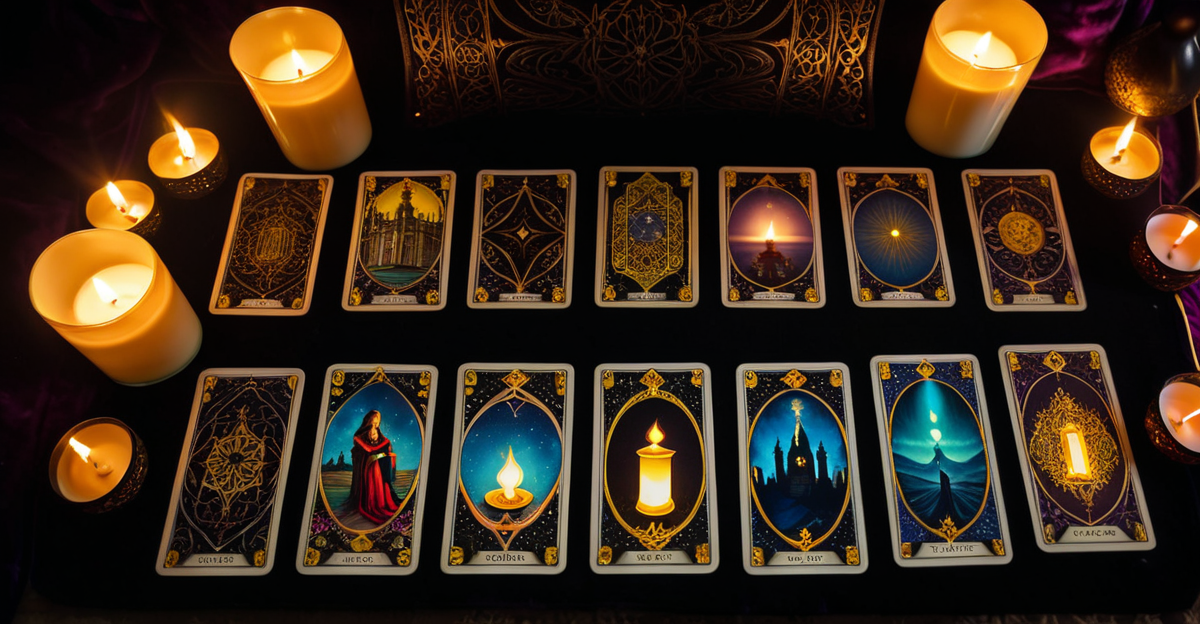
Have you ever felt a pull towards the mysterious, the insightful, or the subtly guiding? Tarot cards, with their rich symbolism and ancient origins, offer a powerful pathway to self-discovery and intuitive wisdom. Far from being tools of fortune-telling, they serve as a mirror, reflecting our inner landscape and illuminating paths we might not have consciously considered.
Tarot for Beginners: How to Start Reading Cards Today
Many beginners feel intimidated by the sheer number of cards and their seemingly complex meanings. However, starting your tarot journey is more accessible than you think. It's about building a relationship with the cards, trusting your intuition, and understanding that every reading is a conversation between you and your subconscious.
In this comprehensive guide, we'll demystify the process, providing you with practical steps to confidently begin reading tarot cards today. You'll learn how to choose your first deck, understand basic card categories, prepare for a reading, and interpret messages with clarity and self-compassion.
Choosing Your First Deck: A Personal Connection
The very first step on your tarot journey is arguably the most personal: selecting your deck. There are thousands of tarot decks available, each with unique artwork, themes, and energies. Don't feel pressured to pick the most popular or the most aesthetically pleasing one to others; instead, allow yourself to be drawn to a deck that resonates with you on an intuitive level. Think of it as choosing a new friend or a trusted confidante. The Rider-Waite-Smith deck is often recommended for beginners due to its widely recognized symbolism and numerous accompanying resources, but it's not a mandatory starting point. Explore different art styles, themes (e.g., nature, mythology, fantasy), and even the feel of the cards in your hands. This initial connection will significantly enhance your reading experience.
- ✦Browse decks online or in person to see what imagery speaks to you.
- ✦Consider the 'feel' of the deck – its size, card stock, and overall energy.
- ✦Don't overthink it; trust your gut feeling when a deck catches your eye.
Understanding the Structure: Major and Minor Arcana
A standard tarot deck consists of 78 cards, divided into two main categories: the Major Arcana and the Minor Arcana. The Major Arcana, comprising 22 cards, represents significant life lessons, archetypal energies, and major life events. These cards often point to overarching themes, spiritual growth, and pivotal moments on your journey. Think of them as the big picture elements in your story. The Minor Arcana, consisting of 56 cards, is further divided into four suits: Wands, Cups, Swords, and Pentacles. These suits correspond to different aspects of daily life and offer insights into more specific situations, emotions, thoughts, and material realities. Each suit has numbered cards (Ace through Ten) and four court cards (Page, Knight, Queen, King), each carrying its own nuanced meaning.
- ✦Major Arcana cards signify major life themes and spiritual lessons.
- ✦Minor Arcana cards detail daily experiences and specific situations.
- ✦Familiarize yourself with the four suits and their general associations.
Preparing for Your Reading: Setting the Sacred Space
Creating a conducive environment for your tarot reading can greatly enhance your focus and intuitive receptivity. This doesn't require elaborate rituals, but rather a conscious effort to establish a calm and respectful space. Before you begin, take a few deep breaths to center yourself. You might light a candle, burn some incense, or play soft, calming music. Clearing your mind of distractions and setting a clear intention for the reading are crucial steps. This preparation signals to your subconscious that you are ready to receive guidance and insights. Remember, the 'sacred space' is ultimately an internal state of mind, but external cues can help you get there.
- ✦Find a quiet place where you won't be disturbed.
- ✦Take a few moments to breathe deeply and clear your mind.
- ✦Set a clear intention or formulate a specific question for your reading.
Shuffling and Drawing: Connecting with the Cards
Shuffling your tarot deck is more than just mixing the cards; it's an opportunity to infuse them with your energy and focus your intention. There's no single 'right' way to shuffle. Some prefer an overhand shuffle, while others spread the cards out on a surface and mix them with their hands. As you shuffle, hold your question or intention in your mind. Continue shuffling until it feels right – until you sense a natural pause or feel ready to draw. When drawing cards, trust your intuition. You might feel a specific card 'call' to you, or you might simply draw from the top or middle of the deck. The method is less important than the mindful attention you bring to the process. Allow the cards to present themselves to you naturally.
- ✦Shuffle your cards while focusing on your question or intention.
- ✦Experiment with different shuffling methods to find what feels natural.
- ✦Trust your intuition when it comes to deciding when to stop shuffling and which cards to draw.
Interpreting the Messages: Trusting Your Intuition
Once you've drawn your cards, the real magic begins: interpretation. For beginners, it's helpful to start with a simple spread, such as a single card draw for daily guidance or a three-card spread for past-present-future insights. As you look at each card, first observe the imagery. What emotions does it evoke? What symbols stand out? Then, consult a beginner-friendly guidebook or online resource to understand the traditional meanings. However, don't let the book dictate your entire interpretation. The most profound insights often come from combining the traditional meaning with your personal intuition and how the card resonates with your specific question or situation. Pay attention to recurring themes, colors, and the overall feeling of the spread. Practice makes perfect, and with time, your intuitive connection to the cards will deepen significantly.
- ✦Start with simple spreads like a one-card draw or a three-card spread.
- ✦First, observe the imagery and your initial gut reaction to the card.
- ✦Combine traditional card meanings with your personal intuition and the context of your question.
Try this practice
- →Choose a single tarot card from your deck that particularly catches your eye, without looking at its meaning yet.
- →Hold the card in your hands, observing its imagery, colors, and any emotions it evokes.
- →Close your eyes and ask yourself: 'What message does this card have for me today?' or 'What energy does this card represent in my life right now?'
- →Open your eyes and write down any initial thoughts, feelings, or intuitive hits that came to you while holding the card.
- →Now, look up the traditional meaning of the card in your guidebook. Compare your intuitive impressions with the established interpretation. Notice where they align and where they diverge, learning to trust your inner voice.
Quick questions
Do I need to be psychic to read tarot? Absolutely not! While some professional readers may have strong psychic abilities, tarot is primarily a tool for intuition, self-reflection, and problem-solving. Everyone possesses intuition, and tarot helps to develop and hone it over time.
Can I read tarot for myself? Yes, reading for yourself is a fantastic way to learn and build a relationship with your deck. It offers a unique opportunity for self-discovery and personal growth, allowing you to explore your own thoughts and feelings without external influence.
What if I get a 'bad' card like The Tower or Death? There are no 'bad' cards in tarot, only challenging ones. Cards like The Tower (sudden change) or Death (transformation) signify endings and new beginnings, often necessary for growth. They are not predictions of doom, but rather calls for introspection and adaptation.
Embarking on your tarot journey is an exciting and enriching experience. Remember that tarot is a tool for empowerment, not a definitive oracle controlling your fate. It offers guidance, illuminates hidden aspects of your psyche, and encourages you to make conscious choices aligned with your highest good. Be patient with yourself, celebrate small insights, and trust the process. The more you engage with your cards, the deeper your connection will become, revealing layers of wisdom within you. Embrace the adventure, and let your intuition be your guide as you uncover the profound messages waiting within each shuffle and draw.


No comments:
Post a Comment